
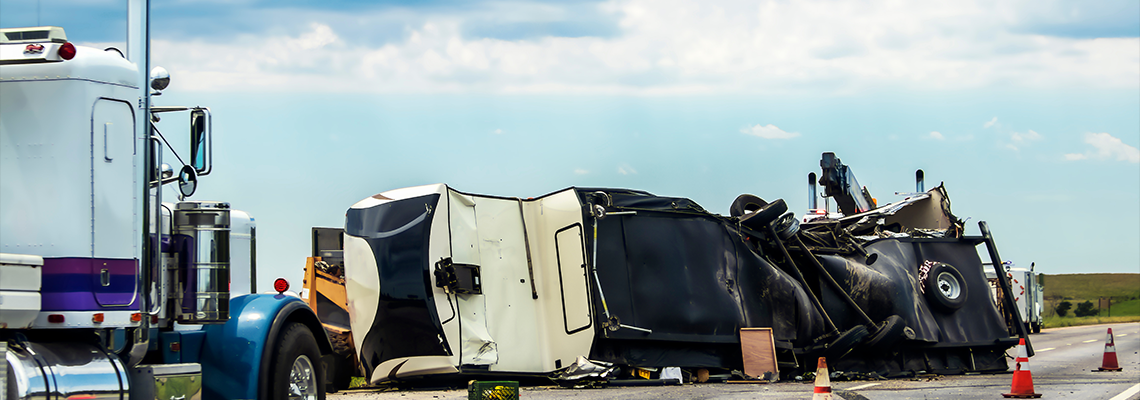
Can a Trucking Company Be Responsible for an Accident?
Accidents involving large commercial trucks can be devastating, leading to serious injuries, significant property damage, and, in some cases, loss of life. Determining who is responsible for the accident is a crucial step in seeking justice and compensation.
A common question victims have is whether the trucking company itself can be held liable for the accident. The answer depends on various factors, including state laws, the specific circumstances of the accident, and the role the trucking company played in contributing to the collision.
At Ronald S. Weiss, Attorney & Counselor, our attorney understands how traumatic truck accidents can be. We are dedicated to helping you secure the compensation you need by listening to your concerns, communicating clearly, and advocating for your best interests. Located in West Bloomfield, Michigan, and Toledo, Ohio, we serve clients throughout both states. Contact us today to schedule a free consultation.
When Can a Trucking Company Be Held Liable for an Accident?
If you have been injured in an accident involving a commercial vehicle, there are several scenarios in which the trucking company could be held responsible. These include, but are not limited to, the following:
Negligent hiring practices: If the company hires unqualified or improperly trained drivers, they can be held liable for the driver's actions.
Violation of federal regulations: Trucking companies must comply with regulations set by the Federal Motor Carrier Safety Administration (FMCSA), which cover areas such as maximum driving hours, vehicle inspections, and cargo loading. Trucking companies could be liable if they fail to comply with these regulations.
Lack of proper maintenance: Trucking companies are responsible for routinely inspecting and maintaining their vehicles to ensure they operate safely. Trucking companies could be liable if neglected maintenance led to mechanical failures.
Pressure on drivers: If a company pressures its drivers to meet unrealistic delivery schedules, encouraging speeding or excessive driving hours, they can be held accountable for accidents resulting from driver fatigue or recklessness.
These scenarios underline the importance of thoroughly investigating all contributing factors to establish liability.
Truck Accident Liability in Michigan
Michigan follows a modified comparative negligence system. This means that you can still seek compensation so long as you are less than 50% at fault for the accident.
When it comes to truck accidents, determining fault often involves evaluating whether the trucking company failed to meet its responsibilities, such as properly maintaining the vehicle, adhering to federal safety regulations, and ensuring its drivers are adequately trained and do not exceed allowable driving hours.
Additionally, Michigan is a no-fault auto insurance state. This means that your personal injury protection (PIP) coverage will typically be responsible for covering your medical costs and some lost wages, regardless of who caused the accident. However, if the accident results in serious injury, disfigurement, or death, pursuing a liability claim against the trucking company may be necessary, depending on the extent of negligence involved.
Truck Accident Liability in Ohio
Unlike Michigan, Ohio uses an at-fault system to determine liability in vehicle accidents, meaning the driver who caused the accident is generally liable for damages to others. Ohio also adheres to a modified comparative negligence rule, meaning that you can recover damages so long as you are less than 50% at fault. However, your compensation will be reduced by the percentage of fault assigned to you.
In Ohio, the key factors for determining liability include assessing whether the trucking company failed to comply with Federal Motor Carrier Safety Administration (FMCSA) safety regulations or failed to hire responsible, qualified drivers. Poor maintenance of their fleet or failure to address known mechanical issues can also place liability squarely on the trucking company. You want to speak with an Ohio personal injury attorney who can analyze the facts and build a strong case on your behalf.
Steps to Take After a Truck Accident
If you have been injured in a trucking accident, you have the right to pursue legal action against the negligent driver and the trucking company, where applicable, to pursue compensation. The critical steps you should follow to gather evidence and build a strong claim include the following:
Seek medical attention: Your health should always be your top priority. Get evaluated by medical professionals, even if you don’t feel seriously injured at the time.
Document the scene: Take photos or videos of the accident scene, including vehicle damage, skid marks, road conditions, and any visible injuries.
Contact law enforcement: File a police report. This will provide an official document that details the circumstances of the accident.
Avoid speaking to insurance adjusters alone: Trucking companies and their insurers may contact you quickly, aiming to minimize their liability, and ultimately, their financial exposure. Avoid making statements without proper legal consultation.
Consult with an experienced personal injury attorney: Trucking accident cases are complicated, often involving multiple parties and extensive investigations. A skilled Michigan personal injury attorney can advocate for your best interests.
Contact Our Personal Injury Attorney Serving Michigan and Ohio Today
If you or a loved one has been involved in a truck accident, you don’t face the aftermath alone. Our firm has extensive experience handling truck accident cases in both Michigan and Ohio, and we will thoroughly investigate every aspect of your case to pursue the compensation you need.
Whether you need assistance dealing with insurance companies or trucking corporations, our attorney, Ronald S. Weiss, Attorney & Counselor, is committed to helping you hold the negligent parties accountable. With offices in West Bloomfield, Michigan, and Toledo, Ohio, we serve clients throughout both states. Contact us to schedule a free consultation.